

Share :
What is the difference between spectroscopy and spectrometry?
Updated On 11/14/2022
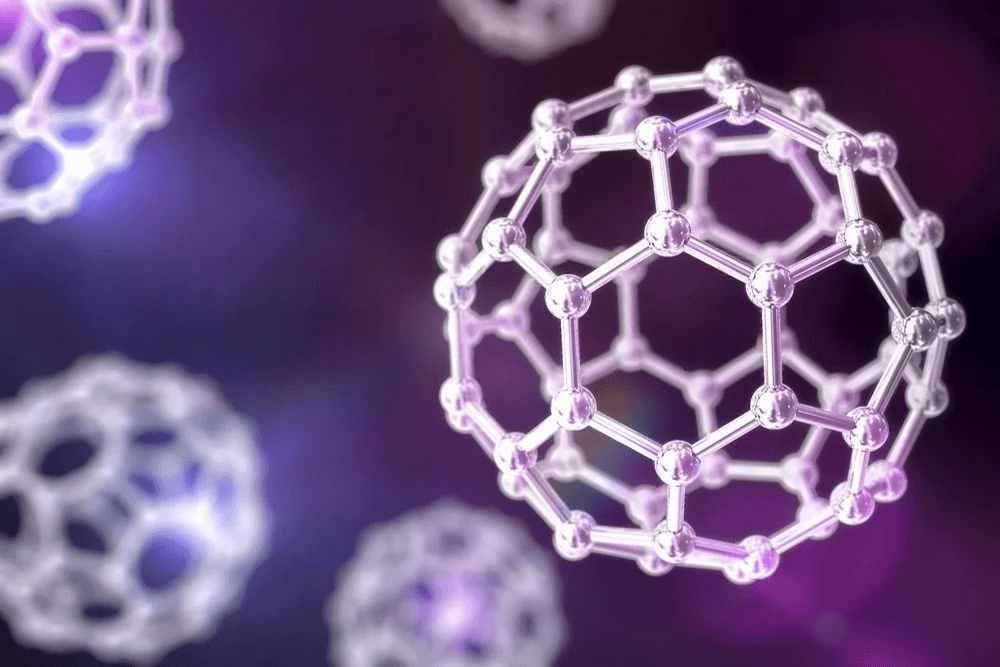
Is Spectroscopy the same as Spectrometry?
Scientific terminology is frequently interchanged, and mainstream scientific interpretations are frequently revised and reinterpreted, resulting in scientific perception errors. While such errors cannot be completely eliminated, they can be reduced by increasing our awareness of them and improving our understanding of the terminology. This is especially true when studying spectroscopy and spectrometry, which are not the same thing. Keeping this in mind, let's dig a little deeper into these concepts.
Principle of spectroscopy:
Spectroscopy is the study of the absorption and emission of light and other radiation by matter. Modern spectroscopy uses a diffraction grating to disperse light, which is then projected onto CCDs (charge-coupled devices), similar to those used in digital cameras. Recently, the definition of spectroscopy has been expanded to also include the study of the interactions between particles such as electrons, protons, and ions, as well as their interaction with other particles as a function of their collision energy.
Ultraviolet and visible (Uv-Vis) absorption spectroscopy is the technique by which we measure the attenuation of light which passes through a consideration sample or also after reflection from the sample. Both parts (Uv and Vis) of light are energetic that can excite electrons to higher energy levels.
This follows the principle of the Beer lambert law which states that absorption of the light by the sample is directly proportional to the path length, and concentration of the sample.
Some applications of spectroscopy:
- We can utilize the distinct spectra to determine the chemical composition, temperature, and velocity of objects in space.
- For metabolite screening and analysis, as well as optimizing drug structure.
- For determining the mass-to-charge ratio of sampled compounds or nanoparticles using a mass spectrometer.
What is Spectrometry?
Spectrometry, on the other hand, is the process utilized to obtain a quantitative measurement of the spectrum. It is the practical application where results are obtained, assisting in the quantification of absorbance, optical density, or transmittance, for example. In short, spectroscopy is the theoretical science, and spectrometry is the practical measurement of the atomic and molecular balance of matter.
Is Spectroscopy or Spectrometry being used for Nanoparticles?
Different materials react differently to light. Some materials absorb more light than others. The light absorption rate makes the material suitable for application. Spectroscopy methods have been around for a long time and have been widely employed for many years in the chemical, biological, and engineering domains.
Many spectroscopic approaches can now be implemented to characterize nanomaterials, as nanotechnology has evolved into its own unique field.
UV-Vis has been shown to be the ideal technique for studying the optical properties of organic or semiconductor materials because as the size of the material decreases, the band gap grows, and Uv-Vis helps to estimate the band gap of the material. These techniques are critical for explaining optical phenomena in the study of nanomaterial properties.
UV-Vis spectroscopy (UV-Vis) is a technique in which a molecule absorbs a specific wavelength of light, causing an electron to be stimulated to a higher energy level. There are two sorts of wavelengths used: one that does not interact with the nanomaterial and one that has been deliberately designed to excite it. The detector then records the ratio of these two light beams and calculates the nanomaterial concentration. Nanoparticles have unique optical properties that are sensitive to size, shape, concentration, aggregation state, and refractive index near the nanoparticle surface, making UV-Vis a great tool for detecting, characterizing, and analyzing nanomaterials.
However, in comparison to other techniques, UV-Vis has fewer uses in nanotechnology, yet it is frequently used for nanoparticles in suspension. UV-Vis can be used to assess the color absorption properties of metallic nanoparticles (through plasmonic absorbance), as well as the sorption, diffusion, and release properties of nanoparticles/nanomaterials, in addition to estimating the concentration of a nanoparticle suspension.
Spectrometers
A spectrometer is a device that measures the variation of a physical characteristic over a specified range, i.e. a spectrum. This could be a mass-to-charge ratio spectrum in a mass spectrometer, a change in nuclear resonant frequencies in an NMR spectrometer, or a change in the absorption and emission of light with a wavelength in an optical spectrometer. A spectrometer measures the wavelength and frequency of light, allowing us to identify and examine the atoms contained inside it. In their most basic form, spectrometers function similarly to complex forms of diffraction.
The three most prevalent types of spectrometers found in research labs around the world are mass spectrometers, NMR spectrometers, and optical spectrometers.
Related Stories
The vital role of Laboratory Incubators
Laboratory incubators are essential tools for scientific research. They provide a controlled environment for growing and maintaining biological samples, which helps to ensure that experiments are conducted under consistent conditions. This leads to increased accuracy and reproducibility of results, improved efficiency, and enhanced safety. As scientific research continues to advance, the need for laboratory incubators with even greater precision and control will become increasingly important.

Burette vs Pipette: Key Differences and Which to Use
This guide explains the practical difference between a burette and a pipette, two instruments that are often confused because both dispense measured volumes of liquid, but that are built for genuinely different jobs. It breaks down how a burette's stopcock and full-length graduated scale let an operator dispense a variable, watched volume and stop the instant a reaction reaches its endpoint, versus how a pipette (volumetric, graduated or micropipette) is built to transfer one known or pre-set volume in a single action. Rather than presenting the two as competing options, the piece frames them as complementary tools tied to different steps in a procedure: burettes for titration and any reaction where the target volume isn't known in advance, pipettes for sample preparation, dilutions and any step where the volume is already fixed.

Top 5 Brands for Graduated Cylinders in 2026
This guide compares the five graduated cylinder brands most commonly used across Australian laboratories: Hirschmann Laborgeräte (DURAN® glass), Kartell (PMP plastic), ISOLAB Laborgeräte, BRAND (BLAUBRAND®) and VITLAB. Rather than treating graduated cylinders as interchangeable, it breaks down what actually separates them, Class A versus Class B accuracy tolerances, glass versus plastic construction, base stability and certification standards such as USP conformity, and explains which of these differences genuinely matter depending on the work.

Top 5 Brands for Erlenmeyer Flasks in 2026
This guide compares the five Erlenmeyer flask brands most commonly used across Australian laboratories today: DWK Life Sciences (DURAN®), ISOLAB Laborgeräte, LLG Labware, BRAND and Kartell. Rather than treating all Erlenmeyer flasks as interchangeable, it breaks down what actually separates them in practice, wall thickness consistency, thermal shock resistance, neck and closure compatibility, and material choice between borosilicate glass and polypropylene, and explains which of these differences matter for which kind of lab work.